Now Reading: How to monetize Youtube channel & How to choose a content
-
01
How to monetize Youtube channel & How to choose a content
How to monetize Youtube channel & How to choose a content

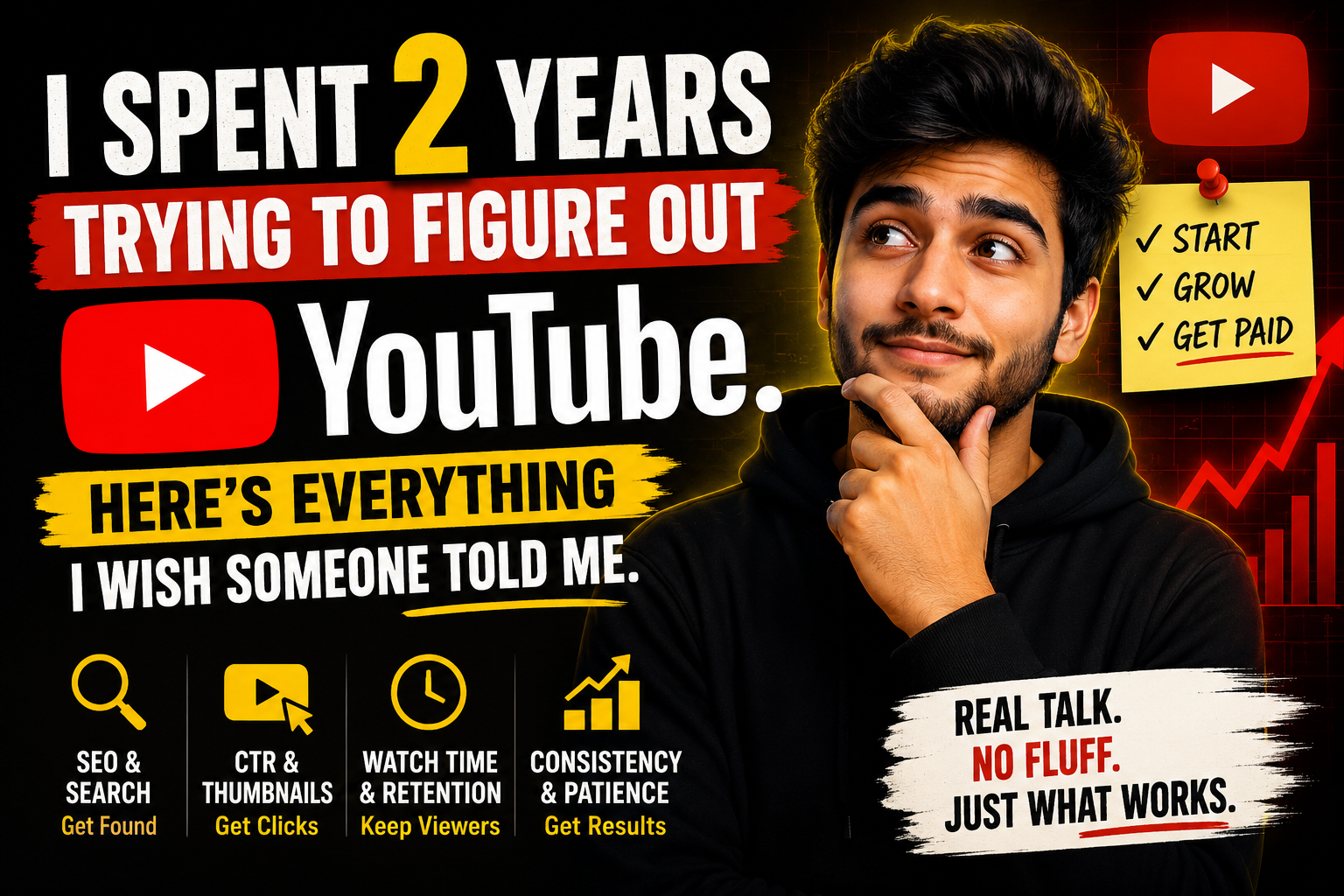
I Spent 2 Years Trying to Figure Out YouTube. Here’s Everything I Wish Someone Told Me.
Okay so I’m going to be honest with you right at the start — I wasted almost a full year on YouTube before anything made sense.
Not because I wasn’t working hard. I was posting videos, reading every “how to grow on YouTube” article I could find, watching MrBeast breakdowns at midnight like they were going to magically transfer his talent into me. I was doing a lot. I just wasn’t doing the right things, and nobody around me actually knew how the platform worked either.
My cousin started a channel around the same time as me. He hit monetization in 7 months. I hit it in 14. Same niche, roughly similar production quality, similar topics. The difference? He understood a few things I didn’t. And once he explained them to me, everything started clicking.
This article is basically that conversation — everything that actually matters about YouTube, from starting a channel to getting paid, written by someone who’s been through the confusion and the slow months and the “why is nobody watching this” phase.
No fluff. No fake promises. Let’s go.
First, forget everything you read in those “YouTube success” threads
Seriously. Most of that stuff is either outdated, oversimplified, or written by people who’ve never actually run a channel. “Post every day!” “Shorts will blow up your channel!” “Go viral in 30 days!”
None of that is how it works. YouTube is slow. It rewards patience in a way that feels almost unfair at the beginning. I know creators who posted 80 videos before one of them randomly took off. I know people who gave up at video 30 and then a year later that channel started getting 10k views a month — with zero new uploads — because old videos finally ranked.
The platform is basically a long game disguised as a short game. Everyone thinks they’re months away from blowing up. Most people are actually years away — but they quit before they get there.
I say this not to discourage you. I say it because if you go in with realistic expectations, you’ll survive the slow phase instead of quitting during it.
What YouTube even is, from a creator’s perspective
Most people think of YouTube as a video platform. And yeah, technically it is. But the way the algorithm treats your content, it’s really more like a search engine crossed with a recommendation engine.
Google owns it. That’s important. It means SEO matters. What people are typing into search boxes matters. The words in your title and description matter — not in a spammy way, but in a “is this video actually relevant to what someone just searched for” way.
The algorithm — and I know everyone acts like it’s this unknowable thing — is actually pretty straightforward once you stop treating it like a mystery. YouTube wants to keep people watching YouTube. That’s it. That’s its entire job. So it promotes videos that people actually watch, click on, and stay on.
What that means for you: your video’s thumbnail and title need to make people want to click. And then your actual video needs to keep them watching. If both those things happen, YouTube starts showing your video to more people. If either one fails, the video dies quietly.
That’s the whole game. Click-through rate and watch time. Everything else is secondary.
Starting your channel — what I’d do differently
On picking a niche: Don’t do what I did. I picked a topic I thought was “smart” rather than one I actually cared about. Six months in I was bored making the content and it showed. Pick something you’d talk about for free, at a dinner table, without needing to be paid. The on-camera energy difference between “I genuinely find this interesting” and “I’m performing interest” is enormous, and viewers can feel it even if they can’t put their finger on why.
Also, go slightly specific. Not so niche that there’s no audience, but not so broad that you’re competing with channels 100x your size from day one. “Cooking” is too broad. “Budget Pakistani recipes under 300 rupees” is a niche. “Cooking Pakistani recipes in a tiny apartment kitchen” is a niche. Specificity is your friend early on.
On gear: I agonized over this for months and it was such a waste of energy. Your phone is fine. A cheap lapel mic — I used a Boya BY-M1, cost me about 2,000 PKR — makes a huge difference in audio, and audio matters more than video quality. Bad visuals are forgiven. Bad audio makes people leave. Natural window light works better than a bad ring light. And editing on CapCut or DaVinci Resolve (both free) is genuinely good enough.
Upgrade when you can afford to, not before. Don’t go into debt for a camera before you know if you’ll actually stick with this.
On your channel page: A lot of new creators treat the channel page like an afterthought. Don’t. Write a real description. Make a banner that doesn’t look like a five-minute Canva job (even though it might be — just spend more than five minutes on it). Film a short channel trailer, even 60 seconds, that tells new visitors who you are and what you make. These things affect whether a casual viewer subscribes or leaves.
The part nobody explains well — how growth actually happens
Growth on YouTube comes from one of three places:
Search. Someone types a question into YouTube and your video comes up. This is reliable and evergreen — a video that ranks for a good search term will keep getting views for years. The way to get here is targeting topics people are actually searching for. Before I make any video, I type the topic into YouTube’s search bar and look at what auto-completes. Those suggestions are real searches. I also use VidIQ (free version is fine) to check estimated search volume.
Browse/Suggested. YouTube recommends your video on the homepage or in the sidebar next to other videos. This is where big growth happens, but you don’t fully control it. You earn it by making videos people actually watch through to the end. Thumbnails that stand out. Titles that create curiosity without being misleading. This takes time to figure out in your specific niche.
External traffic. Someone shares your video on WhatsApp, Reddit, Facebook, Twitter. This one’s unpredictable but you can help it by sharing your own work in relevant communities. Just don’t spam — nobody likes the guy who drops their YouTube link in every Facebook group without contributing anything else.
Most new channels start with search traffic. That’s fine. It’s slow but it’s stable.
The monetization stuff — actually explained properly
Okay this is probably why you’re here. Let’s do it properly.
YouTube Partner Program (AdSense money)
This is the most well-known way, and also the one that requires you to wait the longest. To get in, you need 1,000 subscribers AND 4,000 hours of watch time in the past 12 months. There’s a lower entry tier now (500 subs, 3,000 hours) that unlocks some features, but for actual ad revenue from AdSense, you need the full 1,000/4,000.
Once you’re in, go to YouTube Studio, click Monetization, apply, and then link a Google AdSense account. Takes a few weeks for approval.
Now — and this is important — the ad money alone is probably not what you’re imagining. For most small channels, it’s modest. Your RPM (how much you earn per 1,000 views) depends on your niche and where your viewers are. Finance, business, tech channels get higher RPMs — sometimes $8 to $20+ per thousand views. Entertainment, vlogs, gaming are often $1 to $4. If most of your viewers are in Pakistan or other South Asian countries, your RPM starts lower than if they’re in the US or UK. Not because your content is worse — just because advertisers in those markets bid less.
So don’t calculate your future income based on views alone. 100,000 views on a cooking channel from a local audience might earn $100. The same views on a finance channel with US viewers might earn $1,500. Niche and audience location matter a lot.
Sponsorships — this is where real money comes in
Brands will pay you to mention or feature their product in your video. And here’s the thing — you don’t need to wait for 1,000 subscribers for this. I got my first sponsorship offer at around 800 subscribers. Small money, but it was real.
The rate depends on your niche and engagement rate. A 10,000-subscriber channel with an engaged audience in a product-relevant niche can charge anywhere from $150 to $500 for a mid-roll mention. Once you’re at 50,000+ subscribers in the right niche, you’re looking at $1,000 to $5,000 per video, sometimes more.
To find sponsors early: reach out directly to brands you actually use. Write a short, professional email. Tell them your niche, your audience size, your engagement, and what you’re proposing. Most will say no. Some won’t. Start there.
Later on, platforms like Grapevine or AspireIQ connect creators with brands. But honestly, direct outreach got me my first five sponsorships. Don’t wait for brands to come to you.
One rule I stick to: only promote stuff I’d actually recommend to a friend. I turned down a sponsorship that paid well because I didn’t trust the product. Your audience’s trust is your actual asset. Once it’s gone, it doesn’t come back.
Affiliate marketing — passive income that people sleep on
This one doesn’t get talked about enough, especially for small channels. You sign up for an affiliate program, get a special link, put it in your description, and earn a commission when someone buys through it.
No subscriber minimum. No waiting for YPP. I made affiliate commission from my very first video that got decent views.
Amazon Associates is the obvious one for product review content. Daraz has an affiliate program that works well if your audience is in Pakistan or South Asia. For software and digital products, Impact.com and ShareASale have hundreds of programs to choose from.
The key is only linking things you’d actually recommend. And then mentioning them naturally in the video — “I’ll leave a link in the description if you want to check it out” works way better than an awkward forced plug.
Channel memberships and Super Thanks
Once you’re in the YPP with 500+ subscribers, you can turn on channel memberships. Your loyal viewers pay a monthly amount (you set the tiers) for perks — exclusive videos, members-only posts, badges. Even 50 members at $3/month is $150 consistently. Small, but it adds up.
Super Thanks is a tip button on regular videos. Super Chat is the same thing but during live streams. If you do live streams at all, these can bring in meaningful money from your most engaged viewers.
Selling your own stuff
This is the highest-margin option and honestly the end goal for a lot of creators. Online courses, ebooks, templates, coaching, presets, physical products — YouTube traffic is incredibly valuable for selling things because viewers already trust you before they click your link.
A creator I know has under 5,000 subscribers but runs a YouTube channel teaching a specific skill. He sells a course for $97. Even converting 1% of 10,000 monthly views is 100 sales — that’s nearly a million PKR in a month. Small audience, smart product.
Mistakes I watched myself and others make
Buying subscribers or views. Just don’t. It tanks your watch time ratio because fake accounts don’t actually watch your videos, which signals to YouTube that your content is bad. Your real video performance gets buried. It’s also against YouTube’s terms of service.
Making videos about what you think will get views instead of what you actually know. Viewers can tell when you’re not confident in the topic. You can’t fake expertise convincingly for 10 minutes.
Quitting after 20 videos. I know it feels like nothing is working. It probably isn’t yet. 20 videos is still the beginning. Most channels need 60 to 100 videos before the algorithm has enough data on them to really start pushing content. It’s brutal but it’s true.
Never looking at analytics. YouTube Studio tells you where people drop off in your videos, which thumbnails get clicked more, where your viewers come from. If you’re not checking this stuff regularly you’re flying blind. Check it weekly at minimum.
Uploading without thinking about the thumbnail. I spent an entire year posting videos with mediocre thumbnails and wondering why they weren’t getting clicked. The thumbnail is your billboard. It’s the thing people see before they know anything else about your video. Spend real time on it.
How long does all this actually take?
Genuinely — it varies too much to give you one answer. But here’s a rough honest picture.
Most channels that stay consistent and post every one to two weeks reach 1,000 subscribers somewhere between 9 and 18 months. Some faster if a video hits. Some slower if the niche is very competitive or the content needs work.
Meaningful income — like, actually noticeable money — usually starts around 5,000 to 10,000 subscribers if you’re using multiple income streams. Ad revenue alone at 1,000 subscribers is probably $20 to $80 a month. Not life-changing. But if you layer in affiliate links, a sponsorship or two, and maybe a product — it starts to add up.
The creators I know who are doing this full-time took two to four years to get there. Nobody wants to hear that. But that’s the real number.
The thing that actually makes people quit
It’s not the algorithm. It’s not competition. It’s comparing your month 3 to someone else’s year 4.
You’ll see channels blowing up and feel like you’re doing something wrong. Maybe the gap is just time. Maybe they got lucky with one video. Maybe their niche has less competition. You can’t know from the outside.
What you can control: make the next video better than the last one. Fix the one thing you didn’t like about your last upload. Stay in it long enough for compounding to work in your favor.
YouTube is genuinely one of the few places where putting in consistent work for a few years can build something real and lasting. Videos keep ranking. Old content keeps earning. A channel you built three years ago can still make money while you sleep.
But it asks for time first.